When
Spring and autumn are popular, summer is greener and quieter, and winter can bring crisp clear days. The right season depends on what you want from the journey.
The mountains, monasteries and prayer flags are real. They are also only the beginning.
Forested valleys. Painted farmhouses. Great dzongs rising above rivers. Monasteries clinging to cliffs. These aren't clichés invented for tourism. They are part of Bhutan.

FROM OUR OWN ARCHIVE
Places have a different presence when they are part of your own journeys. A glimpse of the architecture and valleys that shape Bhutan.
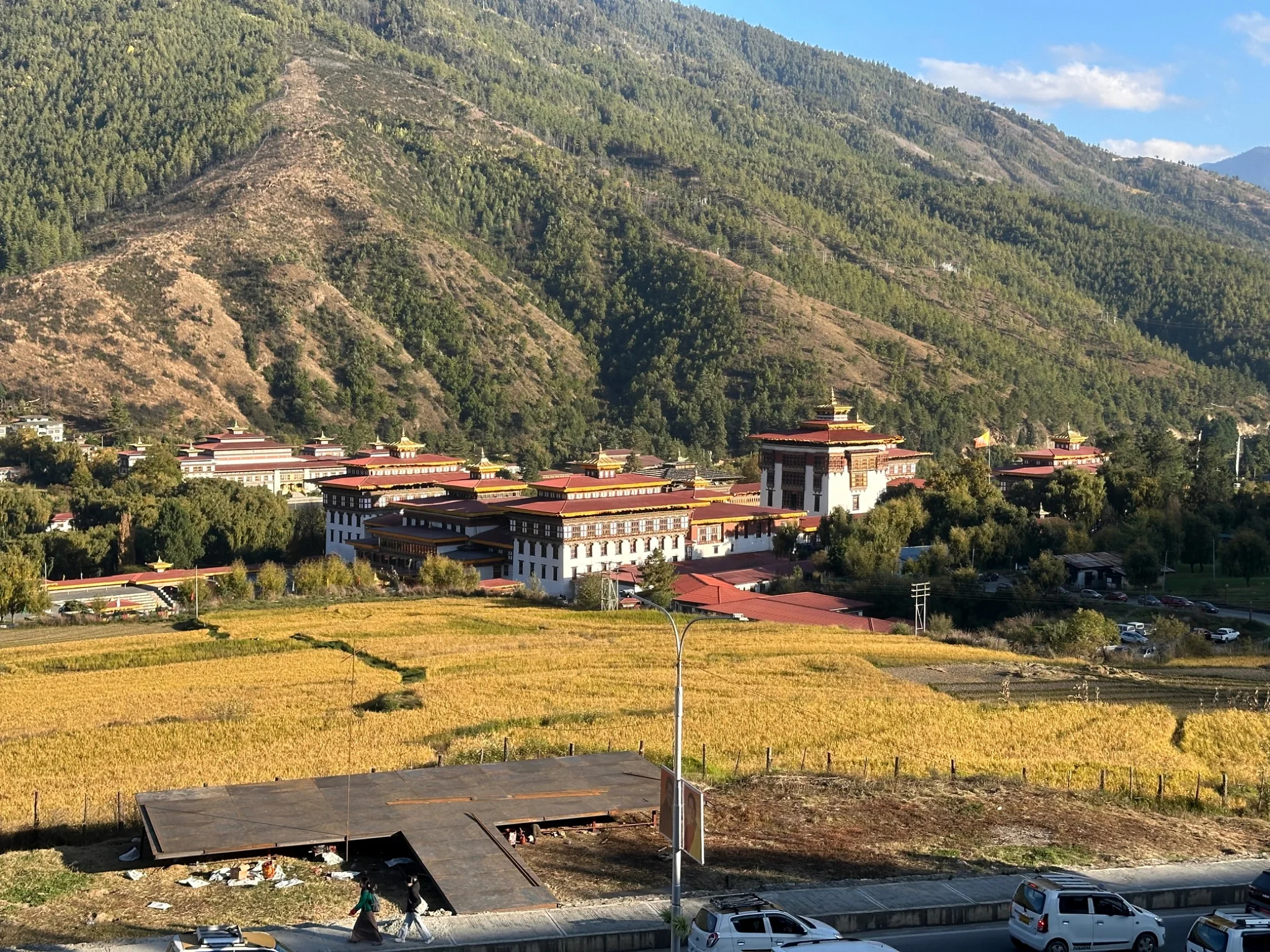
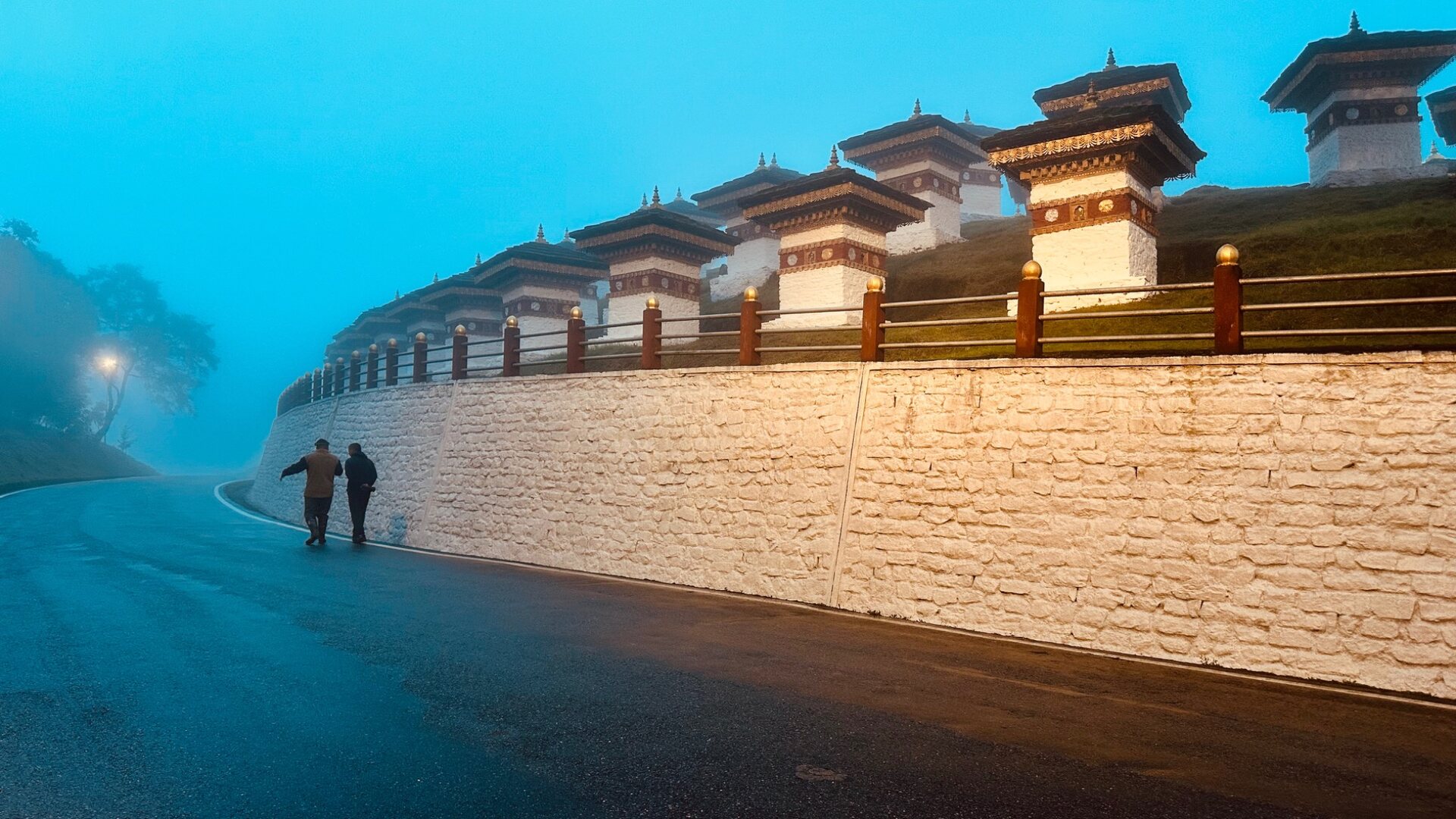
The landmarks matter. But some of the most interesting things about Bhutan begin when you look beyond them. Open any story below.
Bhutan is not standing still. The interesting question is how change and continuity are learning to live together.
Explore this storyBhutan is sometimes described as though it exists outside time. It doesn't.
Young Bhutanese study, travel, build businesses, use the same technologies and imagine many of the same possibilities as young people elsewhere. Thimphu is expanding. Villages are changing. Farming families are asking what the next generation will do. New ambitions sit beside institutions, landscapes and ways of life that have endured for generations.
What makes Bhutan interesting is not simply that tradition has survived. It is the conversation taking place between continuity and change.
Some things are carefully protected. Others adapt almost without notice. Some disappear. And new ideas are constantly entering the picture.
We don't think travellers need a simplified story in which old Bhutan is authentic and new Bhutan somehow less so.
The Bhutan of today is the story.
Understanding a little of that change can make an ordinary drive, a village conversation or an afternoon in Thimphu as revealing as visiting a monument.
The sacred is everywhere in Bhutan, but it is not always something that asks to be explained.
Explore this storyYou will encounter Buddhism almost everywhere in Bhutan: monasteries on mountainsides, prayer flags crossing valleys, chortens beside roads, butter lamps, wall paintings and prayer wheels turned in passing.
But the sacred is not confined to the places visitors come to photograph.
It can be present in the way a landscape is understood, in a family ritual, in the turning of a prayer wheel on the way to work, in the care given to a particular place, or in the quiet rhythm of practices that need no audience.
Some moments will invite explanation. Others are better left alone.
We don't expect visitors to arrive knowing Buddhist history, symbolism or ritual. Nor do we believe every sacred encounter needs to become a lesson.
Curiosity is enough. Respect matters more.
Sometimes understanding a little changes what you see. Sometimes the most appropriate thing is simply to stand quietly and notice.
A plate can tell a story about altitude, climate, farming, trade, family and change.
Explore this storyIn Bhutan, food can tell you surprisingly much about the country.
Chilli is eaten with an enthusiasm that can surprise first-time visitors. Rice changes with altitude and place. Cheese, vegetables, preserved foods, grains and ingredients gathered or grown locally reflect climate, farming and generations of adaptation.
But Bhutanese food is changing too.
What people grow, what reaches markets, what families buy, what young people want to eat and how food moves between farms, towns and restaurants are all part of a much larger story.
That is why we are interested in more than putting a plate in front of you and naming the dishes. A meal can begin a conversation about a farm. A market can reveal how seasons shape everyday life. A kitchen can tell you things that a monument cannot.
Food is one of the ways Bhutan unfolds without announcing that it is doing so.
And yes, sometimes the chilli really is that hot.
Here, the distance between places is often part of the journey rather than time lost between attractions.
Explore this storyOn a map, Bhutan can appear compact. On the ground, mountains change the meaning of distance.
Roads climb through forests, cross high passes, follow rivers and descend into valleys that can feel quite different from the one you left a few hours earlier. Weather arrives. Views disappear into cloud and return. A short distance on the map becomes part of the day.
We don't regard that time as something to endure between attractions.
The road is where landscapes change, conversations wander and the country begins to make geographical sense. It is where you notice settlements, farms, forests, roadside shrines and ordinary life that would never appear as an itinerary highlight.
And occasionally there is a reason to stop that nobody planned that morning.
Sometimes what happens between destinations becomes the part you remember.
That is one reason we resist rushing Bhutan.
Spring and autumn are popular, summer is greener and quieter, and winter can bring crisp clear days. The right season depends on what you want from the journey.
Most international visitors arrive by air into Paro. Once we know where you are travelling from, we can help you understand the sensible route.
Bhutan has specific entry requirements and a Sustainable Development Fee. Government charges are explained transparently when we prepare your journey.
You can see Bhutan in a week. We chose ten days for our flagship journey because it gives the country a little room to unfold.